 By WO
By WO 
NAD: The Cellular Power Molecule Behind Energy, Aging, and Metabolic Health
Nicotinamide adenine dinucleotide — better known as NAD — is one of the most important molecules in human biology. It sits at the center of metabolism, energy production, DNA repair, and healthy aging. Every cell in your body depends on NAD to function, and when levels decline, the effects ripple across hormones, immunity, cognition, and longevity.
Modern wellness clinics, functional medicine practitioners, and longevity researchers consider NAD a foundational biomarker for metabolic health and aging. And with the rise of NAD‑boosting supplements, diagnostic testing, and anti‑aging therapies, interest in this coenzyme has never been higher.
This guide breaks down what NAD is, why it matters, how it works, and what current research reveals about its role in health and disease.
What Is NAD? A Quick, Friendly Breakdown
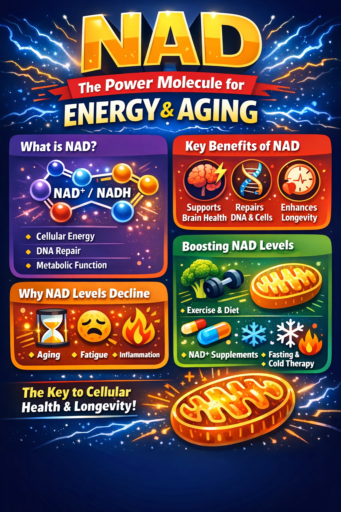
NAD is a coenzyme found in all living cells, essential for turning food into energy and supporting countless biochemical reactions. It exists in two forms:
- NAD⁺ (oxidized form)
- NADH (reduced form)
These two forms cycle back and forth, carrying electrons and powering metabolic reactions that keep your cells alive. This redox cycling is the backbone of energy production.
But NAD does far more than fuel metabolism — it also supports:
- DNA repair
- Cellular signaling
- Immune function
- Mitochondrial health
- Sirtuin activation (key longevity enzymes)
This is why NAD is often called a “master regulator” of cellular health.


Why NAD Matters: Energy, Metabolism, and Aging
🔋 1. NAD Powers Cellular Energy
NAD shuttles electrons during metabolic reactions, enabling ATP production — the energy currency of the cell. Without NAD, mitochondria simply cannot function.
🧬 2. NAD Supports DNA Repair
NAD fuels enzymes like PARPs and sirtuins, which repair DNA damage and maintain genomic stability — a major factor in aging.
🧠 3. NAD Influences Brain Health
NAD‑dependent enzymes regulate neuronal survival, inflammation, and mitochondrial function, making NAD essential for cognitive resilience.
🔥 4. NAD Declines With Age
Research shows NAD levels drop significantly as we get older, contributing to:
- Fatigue
- Metabolic slowdown
- Inflammation
- Cognitive decline
- Hormonal imbalance
This decline is one reason NAD‑boosting supplements and therapies have become central in longevity medicine.
How NAD Works: A Simple Explanation
NAD is a dinucleotide, meaning it’s made of two nucleotides linked together — one containing adenine and the other containing nicotinamide. This structure allows NAD to:
- Accept electrons (becoming NADH)
- Donate electrons (returning to NAD⁺)
This constant cycling drives redox reactions throughout the body. It’s also why NAD is essential in pathways like:
- Glycolysis
- The citric acid cycle
- Oxidative phosphorylation
In short: NAD keeps your metabolism running smoothly.
Where NAD Comes From: Diet, Synthesis, and Salvage Pathways
Your body can make NAD in two ways:
1. De Novo Synthesis
Built from amino acids like tryptophan or aspartic acid. This pathway is active in organs like the liver and kidneys.
2. Salvage Pathway
Recycles components like:
- Nicotinamide (NAM)
- Nicotinic acid (NA)
- Nicotinamide riboside (NR)
This is the primary source of NAD in humans and depends heavily on the enzyme NAMPT.
This is why many NAD‑boosting supplements focus on precursors like NR and NMN.
NAD in the Cell: Where It Lives and What It Does
NAD is found throughout the cell, but concentrations vary:
- 40–70% is in the mitochondria
- The rest is in the cytosol and nucleus
- NAD cannot freely cross membranes — it requires transport proteins
This compartmentalization is important because different cellular processes rely on NAD in different locations.
NAD and Longevity: Why It’s a Hot Topic in Anti‑Aging Medicine
NAD fuels sirtuins, a family of enzymes linked to:
- Lifespan extension
- Metabolic health
- Stress resistance
- DNA repair
As NAD declines with age, sirtuin activity drops — contributing to aging and chronic disease. Restoring NAD levels may help counteract these effects.
This is why NAD is central to:
- Longevity clinics
- Anti‑aging protocols
- Biohacking communities
- Functional medicine programs


NAD and Disease: What Research Shows
NAD metabolism is being studied in conditions like:
- Neurodegenerative diseases (Alzheimer’s, Parkinson’s)
- Multiple sclerosis
- Cancer metabolism
- Metabolic syndrome
- Inflammation and immune dysregulation
Some pathogens even depend on host NAD, making NAD pathways a target for antibiotic development.
NAD Testing: A Growing Trend in Wellness Diagnostics
High‑CPC diagnostic keywords apply here.
Clinics now offer tests for:
- NAD⁺ levels
- Metabolic markers
- Mitochondrial function
- Inflammation (CRP, cytokines)
- Biological age
- DNA damage markers
These tests help practitioners design personalized anti‑aging and metabolic optimization plans.
Can You Boost NAD Naturally?
While the article doesn’t prescribe treatments, research suggests NAD levels may be supported through:
- Adequate vitamin B3 intake
- Exercise
- Heat and cold exposure
- Caloric restriction or fasting
- NAD precursor supplements (NR, NMN, NA, NAM)
These strategies target the salvage pathway or mitochondrial function.
NAD Myths & Misconceptions
❌ “NAD is only about energy.”
It also regulates DNA repair, immunity, and aging.
❌ “NAD supplements work instantly.”
NAD metabolism is complex and varies by tissue.
❌ “NAD infusions are clinically proven for addiction.”
The page notes that such claims lack evidence and may violate medical advertising rules.
Is NAD Worth Paying Attention To?
Absolutely. Whether you’re interested in:
- Anti‑aging
- Metabolic health
- Cognitive performance
- Hormone balance
- Mitochondrial support
…NAD sits at the center of these systems. Understanding how it works — and how it changes with age — is essential for anyone exploring longevity or functional medicine.
FAQ: High‑Intent Search Queries
What does NAD do in the body?
It powers metabolism, supports DNA repair, and regulates cellular signaling.
Why does NAD decline with age?
Increased consumption, reduced synthesis, and mitochondrial stress all contribute.
What foods increase NAD?
Foods rich in vitamin B3 (niacin) support NAD precursor availability.
Is NAD the same as NADH?
They are two forms of the same molecule involved in redox cycling.
Can NAD be measured?
Yes — some clinics offer NAD⁺ testing as part of metabolic and longevity panels.